Give every new member a one-to-one induction, then book a second support session before they leave. In a randomised trial presented by Dr Paul Bedford at IHRSA in 2009, members who got a 60-minute induction plus 60 minutes of support left at 24.3 per 1,000 per month, against 77.6 for an induction alone. The study is not from India, but the method costs only staff time.
Why the first weeks matter so much
The TRP 10,000 research, written up by Dr Melvyn Hillsdon of the University of Exeter, found that around 30% of members made no visits in each of their first three months. Members who visited at least once a month were 27% less likely to cancel in the next month during their first six months. In plain terms: non-attendance comes first and cancellation follows. This is UK data, so treat the numbers as direction rather than an Indian benchmark.
Our churn playbook covers the whole first 90 days. This guide focuses on the induction itself.
Session one: 60 minutes on day one
- Ask before you show. Goal, injuries, training history, and which days they can realistically come. Log it.
- Agree a weekly target. Pick a number they can hit. Twice a week achieved beats five times a week abandoned.
- Teach a short routine. Four to six movements they can repeat alone with confidence.
- Put the plan on their phone. Assign it in the app before they leave, and have them log their first set with you.
- Book session two. Fix the date before they walk out. This is the step most gyms skip.
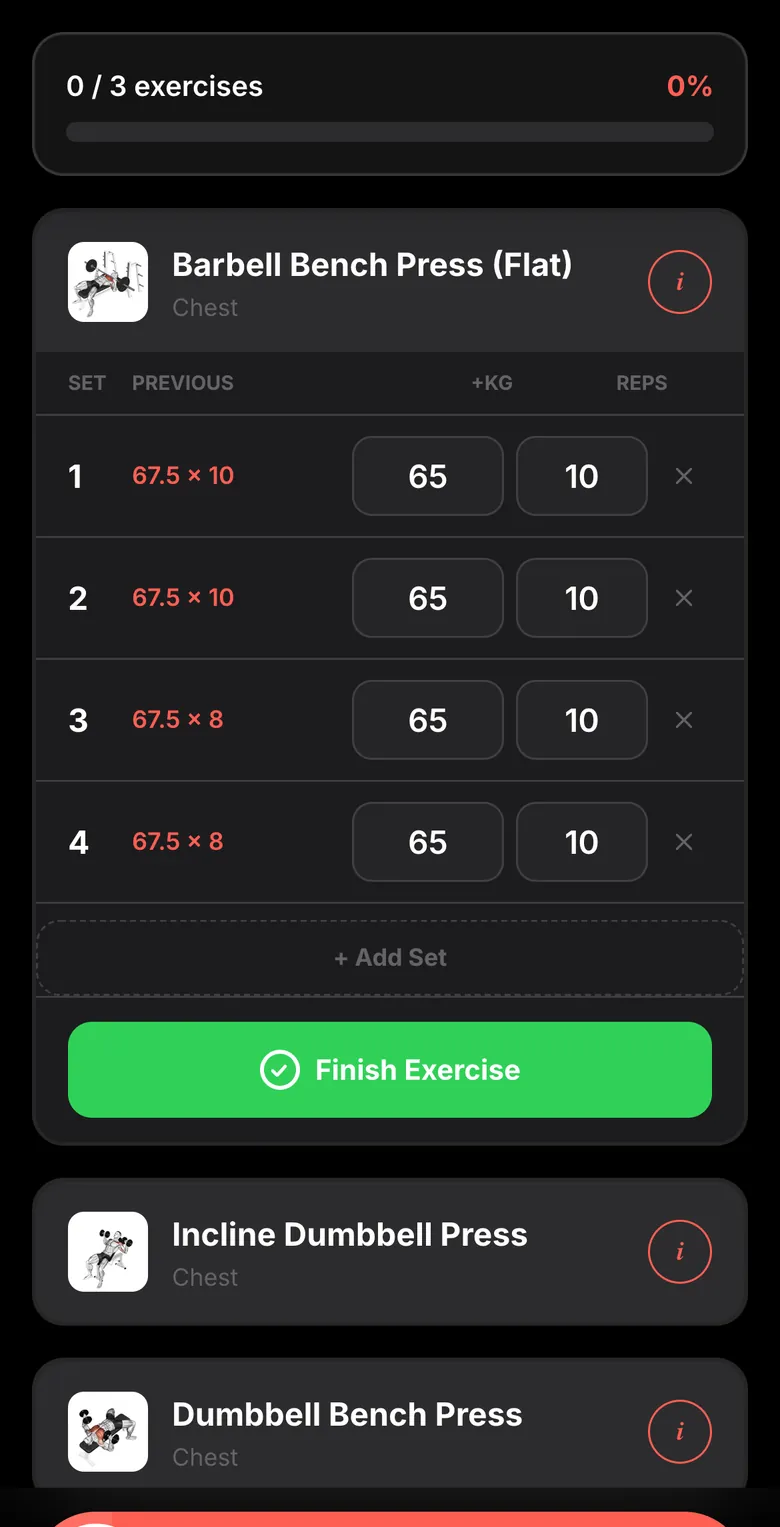
Session two: within 7 to 10 days
This is not more teaching. It is support. Review what felt hard, correct form, adjust the plan and ask what got in the way. In the Bedford trial, this extra support is what separated the two groups.
Weeks three to six: remove the excuses
A study by the Les Mills Lab and Iowa State University of 1,134 people new to exercise found the group given preparation habits, instigation habits and goal setting had 200% higher attendance than the group with no interventions. Les Mills sells group fitness programmes, so read this as a useful idea from a vendor. You can apply it simply:
- Preparation habit: pack the gym bag the night before.
- Instigation habit: a fixed trigger, such as "after dropping the kids, I drive to the gym".
- Goal: one specific target for the next four weeks.
Who should own this
| Day | Action | Owner |
|---|---|---|
| 0 | Induction, plan assigned, session two booked | Trainer |
| 3 | Check-in message | Trainer |
| 7 to 10 | Support session | Trainer |
| 14 | Attendance check against their target | Front desk |
| 30 | Progress review using logged numbers | Trainer |
| 42 | New plan and a class recommendation | Trainer |
Measure whether it works
Track the share of new joiners still attending at day 30 and day 90, split by whether they completed session two. If you use GymVise, attendance and logged workouts sit on the same member profile, and trainers can assign plans from templates in a few taps. For the wider reporting routine, see the metrics owners should track.
Sources
- Dr Paul Bedford: Keeping health club members (IHRSA 2009 slides)
- Health Club Management: Retention, it all adds up (Dr Melvyn Hillsdon, TRP 10,000, 2015)
- Les Mills with Iowa State University: boosting new member attendance
Checked 5 November 2026. Figures from other countries or from vendors are labelled as such, and any example marked as illustrative is not a benchmark.
See how it would work in your gym
We can walk you through the member app and owner dashboard using your own plans.
Book a free demoFrequently asked questions
About 60 minutes for the first session, plus a second support session of similar length within 7 to 10 days. That is the structure used in the trial described above.
It works best when included in the membership. Charging for it means the members who most need help are the least likely to get it.
Run small inductions of two or three new members at fixed times each week, and keep the second session one-to-one, even if it is shorter.