Measure first, then spread demand. Use check-in data to find your real peak hours, move some members to quieter times with off-peak plans and well-timed classes, and protect the peak with floor rules and trainer coverage. Most gyms do not have too many members. They have too many members at the same hour.
Why does crowding matter so much for premium gyms?
A member who pays a premium fee and then waits 15 minutes for a squat rack at 7pm feels cheated, and they compare you with the large, newer chain floor down the road. Crowding is one of the few problems members notice on every single visit. It is also one of the most fixable, because the floor is usually half empty two hours earlier.
How do you measure your real peak?
Guessing is not enough. Use your check-in records to count visits by hour and by day of week for the last four weeks. You will usually see:
- A sharp evening peak, often between 6pm and 9pm on weekdays.
- A smaller early-morning peak, from about 6am to 8am.
- Quiet late mornings and early afternoons, which are capacity you are paying for and not using.
- A different pattern on weekends.
Also track how many members are inside at once, not only arrivals. Arrivals tell you about the queue at the desk. Occupancy tells you about the queue at the racks.
How do you spread demand without losing members?
- Off-peak plans. A lower price for access before 5pm, or outside 6pm–9pm, suits students, shift workers, home-makers and retirees. Price it so it moves members, not so it cannibalises your full plan.
- Classes in the shoulder hours. A popular strength or conditioning class at 5pm or 9pm pulls members away from the 7pm rush. Group exercisers in the UK TRP 10,000 research were 26% less likely to cancel than gym-only members, so classes help retention as well as flow.
- Coached sessions at quiet times. Schedule PT and small-group coaching in the late morning where you can.
- Corporate plans with set hours. Companies in Gurugram and Noida often accept lunchtime or early slots. See winning corporate memberships.
How do you protect the peak itself?
- Trainer coverage. Put your strongest floor trainers on at peak, not only your newest.
- Floor rules. Rest-time etiquette, sharing sets, no reserving machines with towels, and weights back on the rack. Post them and enforce them politely.
- Zone the floor. Keep a free-weights area clear of phone-scrolling and a separate space for warm-ups and mobility.
- Check-in speed. A queue at the desk at 7pm is avoidable. QR or biometric check-in should take seconds. Read biometric vs app check-in.
When is crowding a sign to grow?
If your peak is full, your off-peak is also busy, and members are leaving with crowding as the reason, you may need more space or a second site. Run the tests in when to open a second branch before signing a lease.
What should you tell members?
Tell them the quiet times. Many members would happily come at 8:30pm instead of 7pm if they knew the floor was calmer. Share a simple chart at the desk and in your app announcements every month, and watch how it changes.
What GymVise does and does not do here
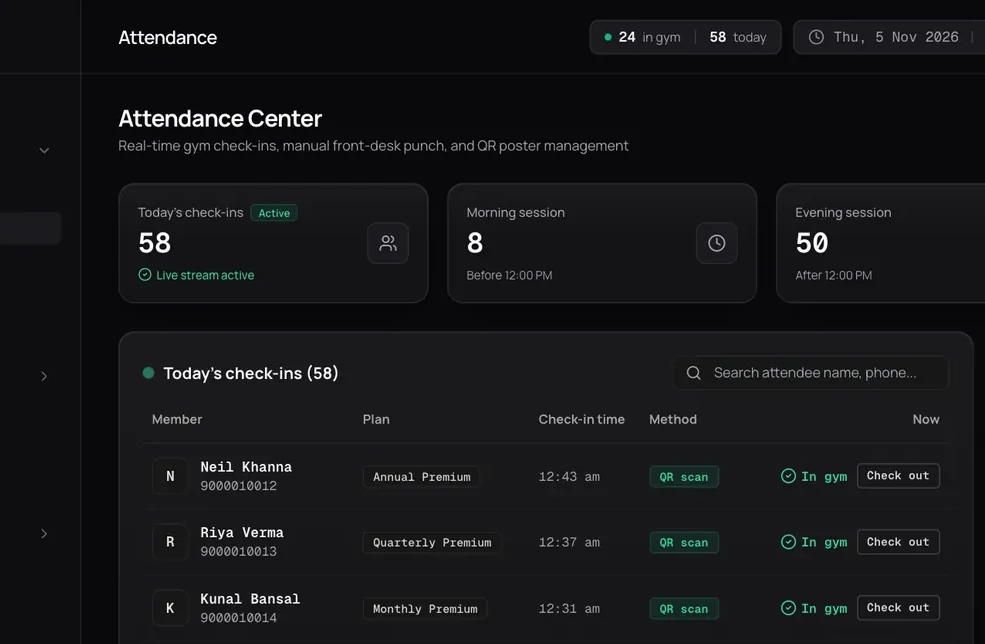
GymVise records every check-in from QR self check-in, the front desk and eSSL or ZKTeco biometric devices in one attendance log, shows the owner who is in the gym right now, and splits footfall between morning and evening. You can add an off-peak plan beside your others and schedule shoulder-hour classes members book in the app. GymVise does not restrict check-in by time of day or show live occupancy to members yet, so off-peak rules are enforced at the desk and quiet times shared through announcements.
Sources
Checked 14 November 2026. Figures from other countries or from vendors are labelled as such, and any example marked as illustrative is not a benchmark.
See how it would work in your gym
We can walk you through the member app and owner dashboard using your own plans and timetable.
Book a free demoFrequently asked questions
Usually weekday evenings from about 6pm to 9pm, with a smaller early-morning peak. Check your own check-in data by hour, because every catchment differs.
They can, if priced to move members rather than to discount everyone. Students, shift workers and retirees often prefer them.
Spread demand with off-peak plans and shoulder-hour classes, post floor etiquette rules, zone the floor and put experienced trainers on at peak.