In most cases, yes, starting small. In the TRP 10,000 research, group exercisers were 26% less likely to cancel than gym-only members, even after accounting for age, gender, membership length and visit frequency. Begin with two or three formats at the times your floor is quietest or your members ask for most, and let bookings decide what stays.
What the research says
The study, by Dr Melvyn Hillsdon of the University of Exeter, followed UK club members and recorded 1,526 cancellations. By the end of the follow-up, 88% of group exercisers had kept their membership, against 82% of gym-only members. One caveat: 66% of group exercisers also used the gym floor, so it does not show classes are better than gym training. It suggests that the group adds something. Treat it as a strong hint, as it is not Indian data.
The Les Mills 2026 Global Fitness Report, from a company that sells class programmes, says 45% of Gen Z and millennial respondents seek out group workouts, and 88% of members want yoga, breathwork or meditation on the timetable.
Why this helps against chains and boutiques
Classes create something the machine floor rarely does: people who expect to see each other next week. That social pull is hard for a competitor to copy with a discount. It also lets you offer a format without a boutique's single-purpose costs.
Which formats to start with
| Format | Needs | Good for |
|---|---|---|
| Small-group strength | Existing weights and a coach | Members nervous about the weights area |
| Yoga or mobility | A quiet room and mats | Recovery, older members, stress relief |
| HIIT or conditioning | Open floor space | Time-poor professionals |
| Reformer Pilates | Costly equipment, trained instructors | Premium pricing, once demand is proven |
The Les Mills report found that 50% of people interested in strength training feel out of place in the weights area. A coached beginners' strength class solves this directly, and uses equipment you already own.
Capacity maths
An illustrative example: a 16-person class at 75% average attendance puts 12 people in the room. If a coach costs ₹800 a session, that is about ₹67 a head. Now compare that with what those members pay you and the retention you gain. Decide a minimum number for each class and review it after six weeks.
Running it well
- Use app booking, with a capacity limit. A WhatsApp group breaks at scale and hides no-shows.
- Keep the timetable stable. Habits form around fixed times, so change slots rarely.
- Name the coach. Members come for a person, so show who is teaching.
- Take attendance. Then cut low performers quickly without drama.
- Cancel with care. Tell booked members as early as you can and say why.
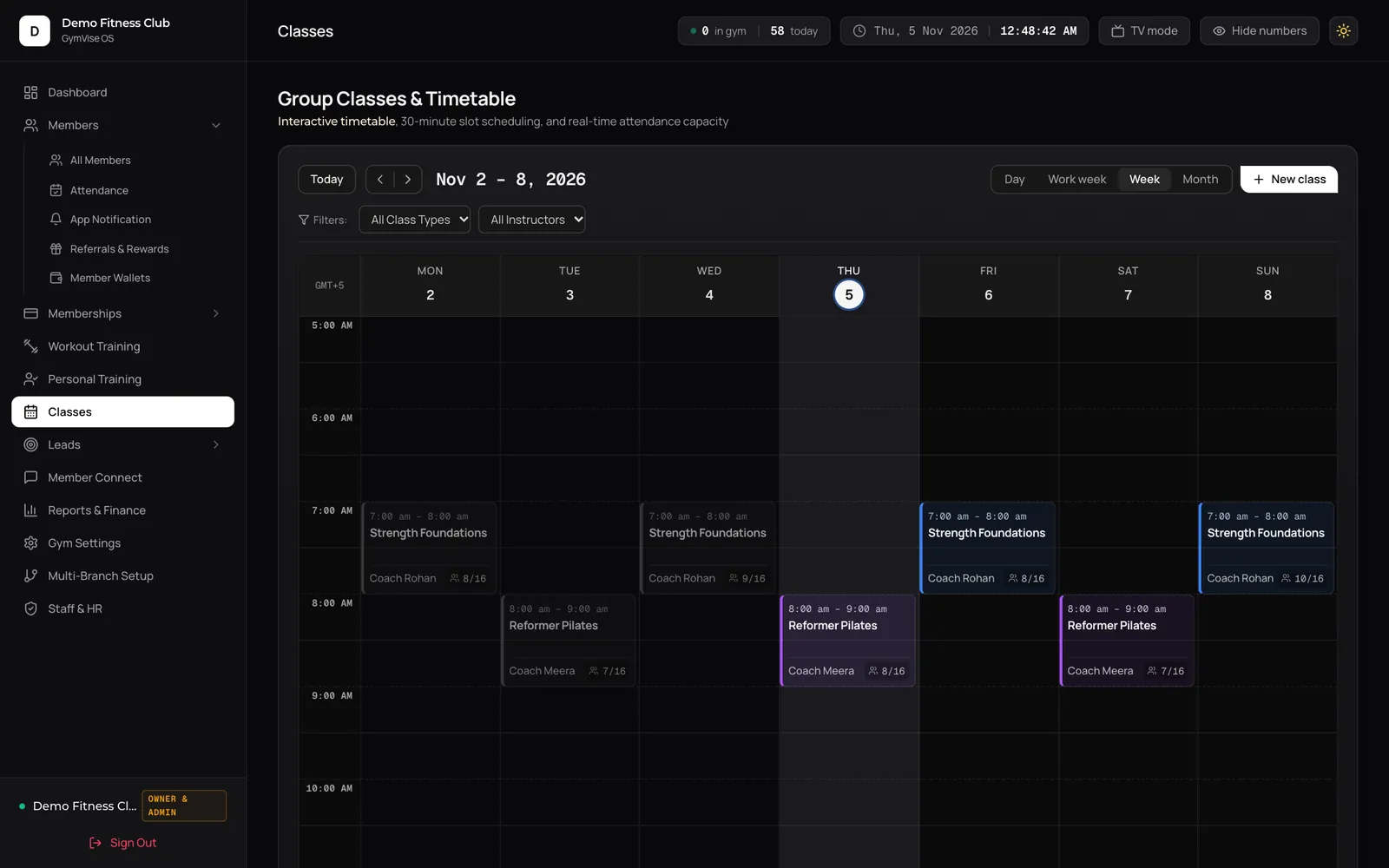
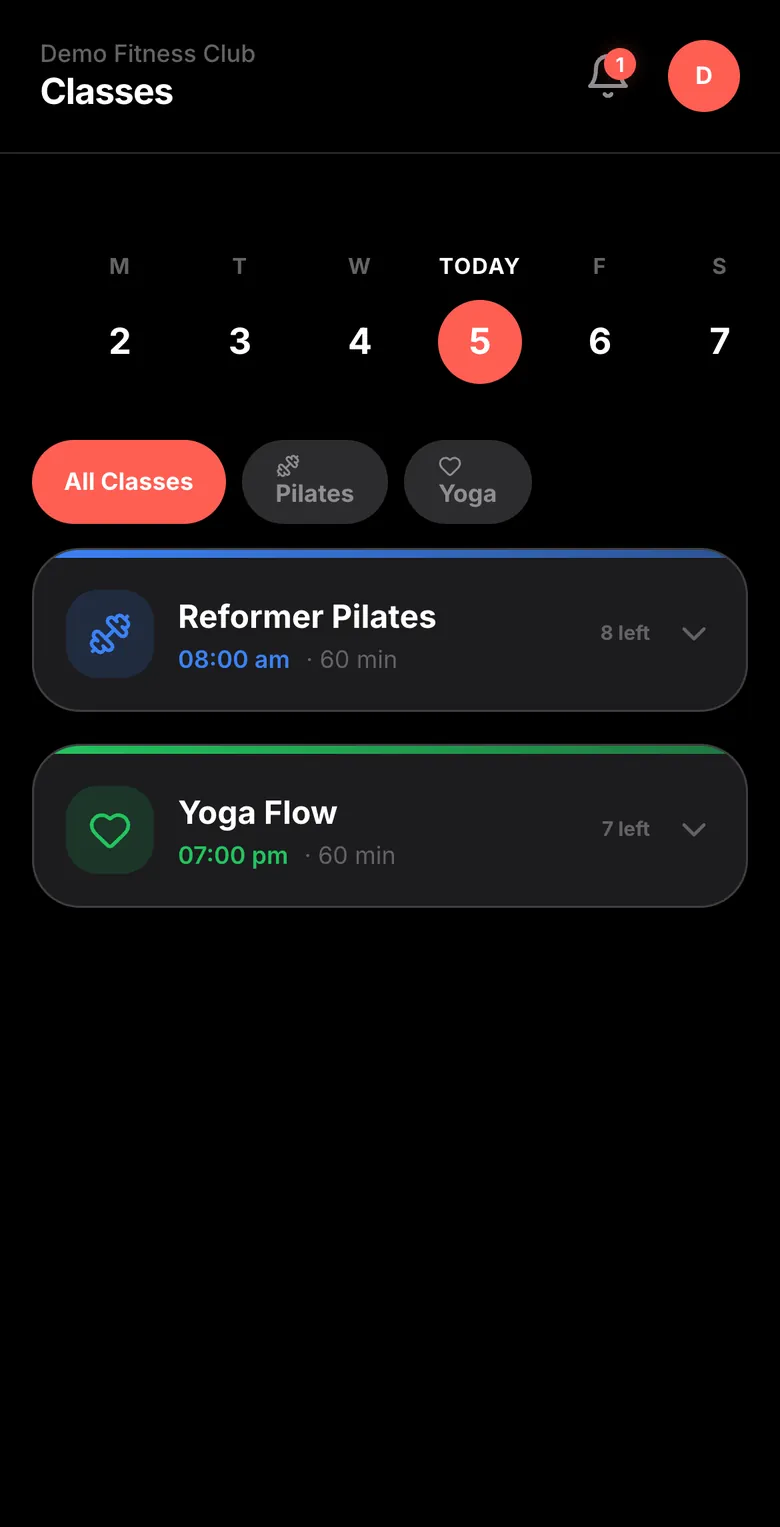
GymVise includes a recurring class calendar and member self-booking. To see how classes affect your revenue picture, use the gym revenue and churn calculator. For why this appeals to younger members, read what Gen Z members want.
Sources
- Fit Tech: Group exercise vs gym (Dr Melvyn Hillsdon, TRP 10,000, 2014)
- Les Mills: 2026 Global Fitness Report (20 January 2026)
Checked 5 November 2026. Figures from other countries or from vendors are labelled as such, and any example marked as illustrative is not a benchmark.
See how it would work in your gym
We can walk you through the member app and owner dashboard using your own plans.
Book a free demoFrequently asked questions
Research from the UK TRP 10,000 study found group exercisers were 26% less likely to cancel than gym-only members after adjusting for other factors. It has not been repeated on Indian data that we know of.
Two or three formats, each scheduled two or three times a week. Add more only when existing sessions regularly fill.
Basic classes often work best as part of a premium membership tier. Specialised formats such as reformer Pilates can be charged separately, as they cost more to run.