Package nutrition as a coached service, not a PDF. Offer a diet plan built by a qualified coach, delivered in the member’s app, reviewed every two to four weeks against body measurements. Sell it on its own and bundled with personal training. Refer medical cases to a registered dietitian, and never promise a number on the scale.
Why is nutrition a 2027 opportunity?
Members join gyms to change how they look and feel, and most know that training alone will not get them there. The American College of Sports Medicine’s survey of more than 2,000 fitness professionals ranks exercise for weight management third among fitness trends for 2026. Members on weight-loss medicines also need guidance on eating enough protein and keeping up strength training, alongside their doctor’s advice.
Yet in many Indian gyms, diet advice is a forwarded PDF, a WhatsApp message from a trainer, or nothing. That gap is easy for an independent gym to fill, and it is revenue a budget chain rarely captures well.
What should a nutrition service include?
- An intake. Goals, routine, food preferences (vegetarian, Jain, eggetarian, non-vegetarian), allergies and any medical conditions.
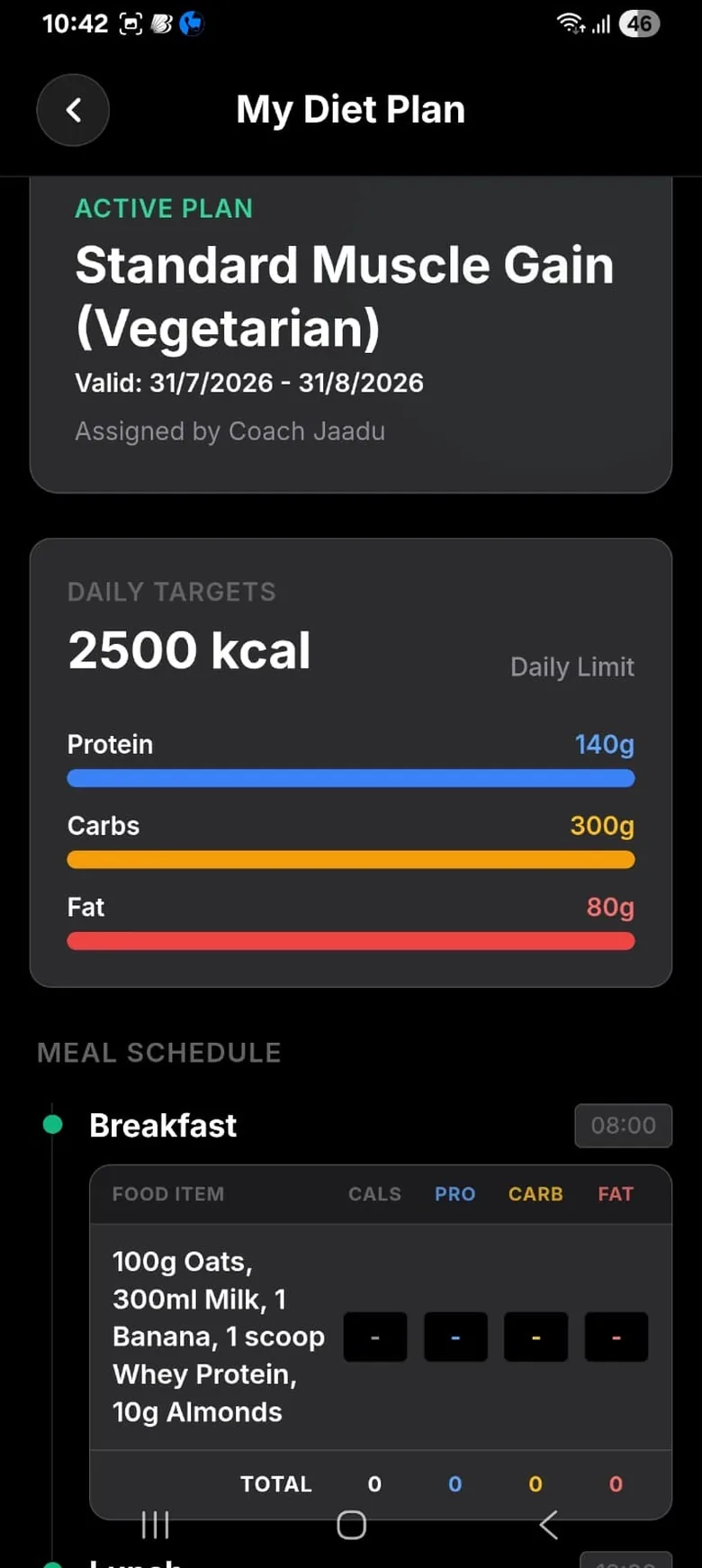
- A written plan. Daily calories and protein, carbs and fat, with a meal schedule built around Indian food the member actually eats.
- Regular reviews. Every two to four weeks, against body measurements and how the member feels.
- A way to ask questions. Through the gym’s app, not a trainer’s personal number.
Who should give nutrition advice?
Be clear about scope. Trainers with a recognised nutrition certification can guide healthy members on general eating, calories and protein. Members with diabetes, thyroid conditions, kidney problems, eating disorders, pregnancy, or anyone on prescription medicines including weight-loss drugs, should be referred to a doctor or registered dietitian. Write this rule down and train your team on it. It protects members and it protects your gym.
Many premium gyms partner with a registered dietitian for complex cases and keep general plans in-house.
How do you price it?
Three common models:
- Standalone plan: a monthly or quarterly fee for a plan plus reviews.
- Bundled with PT: a higher-value package that includes nutrition, which raises PT renewals. See growing PT revenue.
- Add-on to membership: a lighter, template-based plan with a monthly review.
Price on the coach’s time. As an illustration only: an intake of 45 minutes and two 15-minute reviews a month is about 75 minutes of coaching in the first month, and 30 minutes a month after that. Use templates for common goals so plans take minutes, not hours, to build.
How do you show it is working?
Measure every member on a nutrition plan at the start and every four weeks: weight, waist and, if you measure it, body fat. Show the change in the app. Do not promise a result. Promise a process and report honestly on it.
What mistakes should you avoid?
- Copy-paste plans. Members notice when their plan is the same as everyone else’s.
- Selling supplements as the plan. If you sell supplements, keep them separate from the advice.
- No review. A plan without review is a document, not coaching.
- Crash diets. Very low calorie plans lose muscle and members. Pair nutrition with strength training.
What GymVise does and does not do here
In GymVise, trainers build diet plans from templates with calorie and macro targets and a meal schedule, and members see their current plan and past plans in the app. Members or trainers log weight, body fat and measurements, charted over time, and trainers can chat with clients in the app. GymVise does not include a food-logging or calorie-counting diary, or medical screening, so those need a separate tool or professional.
Sources
Checked 14 November 2026. Figures from other countries or from vendors are labelled as such, and any example marked as illustrative is not a benchmark.
See how it would work in your gym
We can walk you through the member app and owner dashboard using your own plans and timetable.
Book a free demoFrequently asked questions
Trainers with a recognised nutrition certification can guide healthy members on general eating. Refer members with medical conditions or on prescription medicines to a doctor or registered dietitian.
On the coach’s time: an intake plus regular reviews. Offer it standalone, bundled with personal training, or as a lighter add-on to membership.
Every two to four weeks, against body measurements and how the member feels, so the plan changes with their progress.