Members rarely leave because the gym is bad. They leave because they cannot see that it is working. Logged workouts, personal records and regular body measurements turn slow progress into something visible, give trainers a reason to talk to each member, and give the member a reason to renew. Start with set-by-set workout logging and a measurement every four weeks.
Why do members quit when they are still making progress?
Strength and body composition change slowly. A member who adds 10 kg to their squat over three months and loses 3 cm from the waist has done very well, but on any single day the mirror looks the same. Without a record, the member only remembers that they are tired and that the fee is due.
This is where premium gyms separate from budget ones. A budget gym sells access. A premium gym shows the member what the access has done for them.
What does the research say about goals and tracking?
A study run by the Les Mills Lab with Iowa State University followed 1,134 people new to exercise. The group given preparation habits, instigation habits and goal setting had 200% higher attendance than the group given no interventions. Les Mills sells group fitness programmes, so treat it as a strong idea from a vendor rather than a neutral benchmark.
The UK’s TRP 10,000 research found that about 30% of new members made no visits in each of their first three months, and that non-attendance comes before cancellation. Tracking does not fix that on its own, but it gives you the early signal: a member who stops logging is a member who is drifting.
What should a gym track?
- Workouts, set by set. Exercise, weight and reps. This is the raw material for everything else.
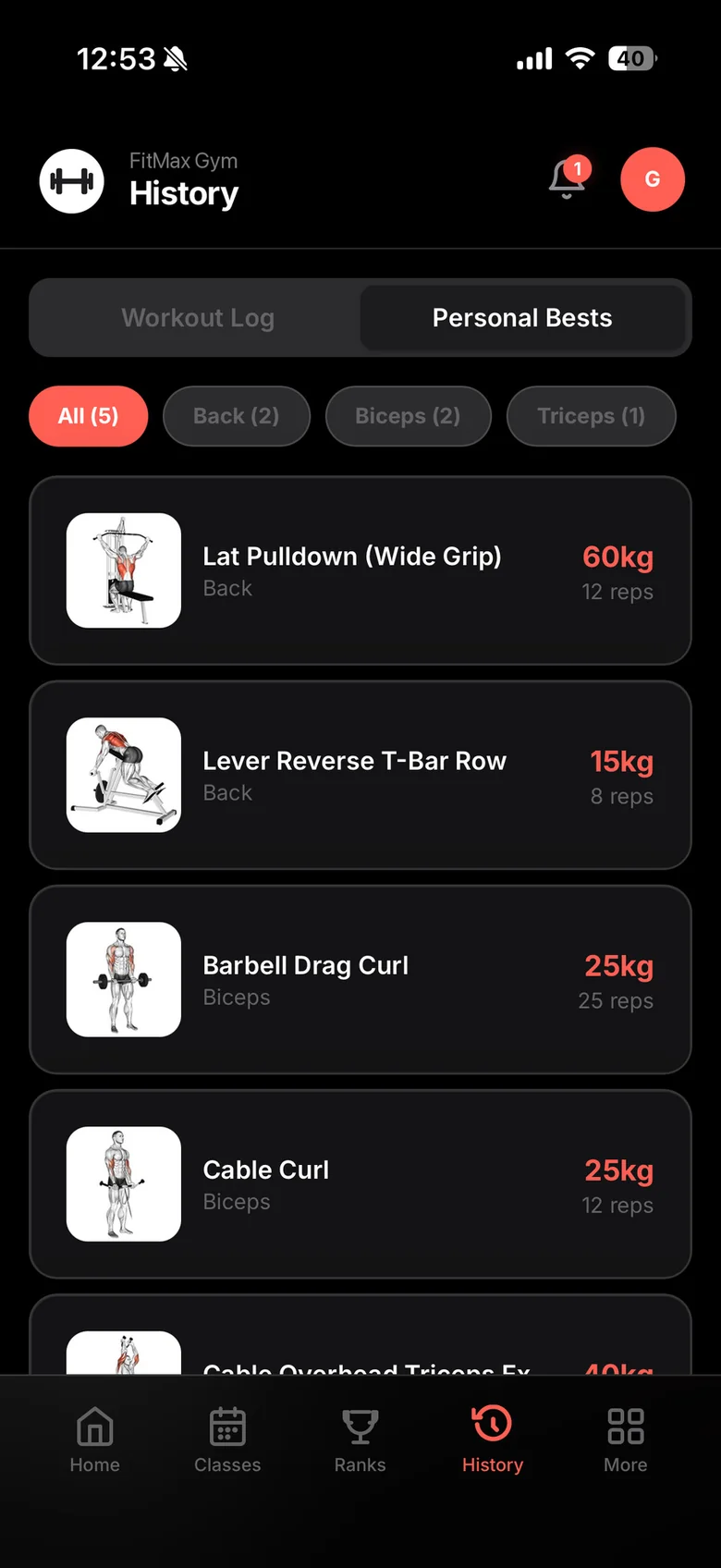
- Personal records. The heaviest lift or most reps for each exercise. A new record is the single best moment in a member’s month.
- Body measurements. Weight, body fat if you measure it, and tape measurements of chest, waist, hips and arms every four weeks.
- Attendance. Visits per week, so a falling habit shows up before the renewal date.
Do not start with everything. Workout logging and a monthly measurement are enough for the first quarter.
How do trainers use the data?
Data only keeps members if someone uses it. Build three habits into your trainers’ week:
- Celebrate records out loud. When a member hits a new record, the trainer on the floor should know and say so.
- Review measurements together. A five-minute chat every four weeks: what changed, what did not, what to adjust.
- Chase silence. A member with no logged workout for ten days gets a message from their trainer, not from the accounts desk.
What about members who do not want to log?
Some members will never type a number into an app, and that is fine. Trainers can log measurements for them, and the trainer’s plan can still sit in the app as a reference. Do not make logging a condition of membership. Make it so easy and so rewarding that most members choose it.
How does tracking connect to renewals?
Put progress in front of the member just before the renewal date. A message that says “you are 12 kg stronger on the deadlift and 4 cm down at the waist since January” sells the next term better than any discount. Pair it with an early-warning routine for drifting members and a structured induction.
What can go wrong?
- Weight-only tracking. Scale weight can stall while a member gets stronger and leaner. Always pair it with tape measurements and lifts.
- Data trainers never see. If logs live only on the member’s phone, the gym gets none of the benefit.
- Sensitive data handled carelessly. Body measurements are personal. Under India’s DPDP Rules, limit staff access and tell members what you store. See the DPDP Act and gyms.
What GymVise does and does not do here
In GymVise, members log weight and reps for every set with last session’s numbers beside them, the app flags new personal records, and members see their full workout history and a personal bests board. Members or their trainers log weight, body fat and body measurements, charted over time. The owner dashboard flags members who have not visited in 10 days. GymVise does not import data from wearables or smart scales yet.
Sources
- Les Mills with Iowa State University: boosting new member attendance
- Health Club Management: Retention, it all adds up (Dr Melvyn Hillsdon, TRP 10,000, 2015)
Checked 14 November 2026. Figures from other countries or from vendors are labelled as such, and any example marked as illustrative is not a benchmark.
See how it would work in your gym
We can walk you through the member app and owner dashboard using your own plans and timetable.
Book a free demoFrequently asked questions
Goal setting and habit support raised attendance sharply in a Les Mills and Iowa State study, and UK research shows non-attendance comes before cancellation. Tracking makes both visible.
Every four weeks is a good rhythm for most members. It is long enough for change to show and short enough to keep members engaged.
Set-by-set workout logs and a monthly body measurement. Add personal records and attendance trends once those habits are working.