Most no-shows are forgetful members, not rude ones. Send a reminder a few hours before class, let members cancel in the app until a clear cut-off, and talk to repeat no-shows personally before you penalise anyone. Then use booking data to move, merge or drop classes that never fill.
Why do no-shows matter?
A class with 20 bookings and 12 attendees looks full on the schedule and half-empty in the room. Members who could not book went elsewhere, the instructor teaches to empty spaces, and the energy that makes group training worth joining disappears. For a gym competing with chains on experience, that is costly.
It matters for retention, too. In the UK TRP 10,000 research, group exercisers were 26% less likely to cancel than gym-only members after adjusting for other factors. Every empty booked spot is a member who missed one of your stickiest experiences.
Why do members not turn up?
- They forgot. Booking on Sunday for Thursday is easy. Remembering on Thursday is not.
- Cancelling is harder than not coming. If cancelling means calling the desk, many members simply do not show.
- They booked “just in case”. In popular classes, members hold spots they may not use.
- The class is wrong for them. Too hard, too early or with an instructor they do not click with.
What policy works?
- Remind them. A notification two to three hours before class, and a second one for early-morning classes the evening before.
- Make cancelling one tap. If members can cancel in the app, many will.
- Set a cancellation cut-off. For example, cancel at least two hours before class. Publish it and show it at booking.
- Talk before you penalise. A member with three no-shows in a month gets a friendly call. Most change immediately.
- Use penalties sparingly. A short booking pause for repeat offenders is fairer than a fee, and less likely to end in a bad review.
How do you set class capacity?
Set capacity by what the room and the instructor can coach well, not by how many bodies fit. A strength class with one coach and barbells may work best at 10 to 12. A conditioning class may take 20. Watch the attendance rate for each class for a month. If a class regularly sees more no-shows than others, check the time and the format before blaming the members.
How should booking data shape your timetable?
Every month, review each class on three numbers:
- Bookings as a share of capacity. Below about half for a month, move or merge it.
- Attendance as a share of bookings. Low attendance points to a time or reminder problem.
- Repeat attendees. A class with the same 15 loyal members is a success even if it never sells out.
Our guide to group classes in an independent gym covers which formats to start with and how to plan capacity.
What about cancellations by the gym?
If you cancel or move a class, tell every booked member at once, in the app, with the reason. Nothing teaches members to ignore bookings faster than turning up to a class that was quietly cancelled.
What GymVise does and does not do here
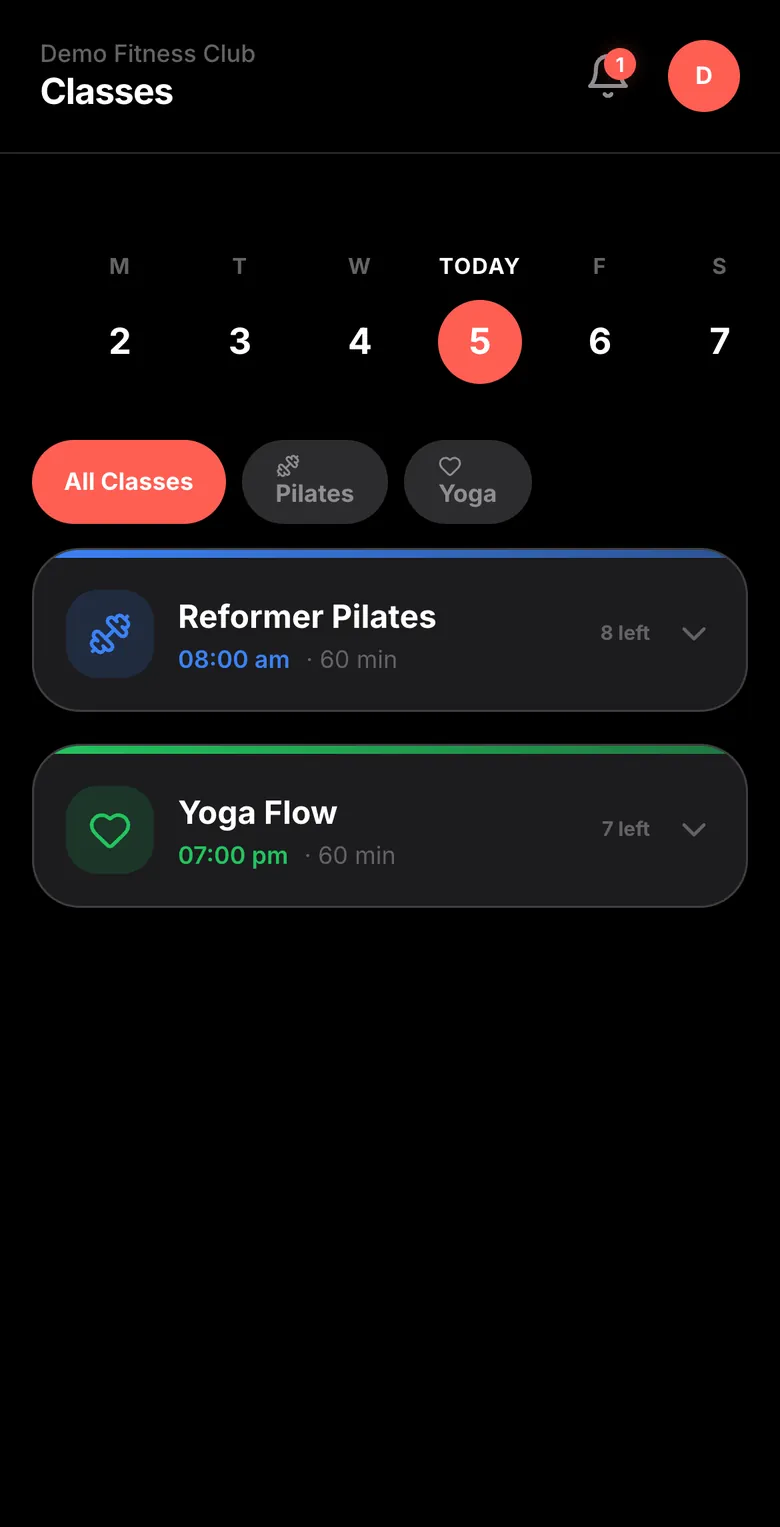
GymVise members book and cancel classes in the app, see spots left before booking, and get a notification when a class is added, changed or cancelled. Staff can send a one-tap class reminder to everyone booked, and see the booking list for each session. GymVise does not have waitlists or automatic no-show penalties yet, so repeat no-shows are handled by your team.
Sources
Checked 14 November 2026. Figures from other countries or from vendors are labelled as such, and any example marked as illustrative is not a benchmark.
See how it would work in your gym
We can walk you through the member app and owner dashboard using your own plans and timetable.
Book a free demoFrequently asked questions
Send a reminder a few hours before class, let members cancel in the app until a clear cut-off, and talk personally to members who repeatedly miss booked classes.
Usually not at first. A conversation fixes most cases, and a short booking pause for repeat offenders is fairer than a fee and causes fewer complaints.
Whatever the room and the coach can teach well. Strength classes often work best at 10 to 12 people, conditioning classes at around 20.