Write one short policy that covers freezes, transfers, cancellations and refunds, show it at joining, and apply it the same way for everyone. A fair freeze rule keeps members who would otherwise quit during travel, illness or exams. Clear cancellation terms prevent the billing disputes behind many one-star reviews and consumer complaints.
Why does a gym need a written policy?
Most membership arguments in Indian gyms start with a sentence like “nobody told me”. A member breaks a leg, moves to Bengaluru or has board exams, and asks to pause or get money back. If the answer depends on who is at the desk that day, members feel cheated and staff feel stuck.
A written policy turns a fight into a process. It also protects you if a member complains to the National Consumer Helpline or writes a public review, because you can show the terms they accepted.
What should a freeze rule say?
A freeze pauses a membership and extends its end date by the paused days. It is the single best tool for keeping members through a bad month. A fair rule covers:
- Who can freeze: usually plans of three months or longer.
- How long: for example up to 30 days on a quarterly plan and up to 60 days on an annual plan, with a minimum of 7 days.
- How often: once or twice per term.
- Medical freezes: longer, with a doctor’s note.
- Notice: request at least a few days before the freeze starts, not after.
- Fee: free, or a small fee for long freezes. Keep it simple.
Should you allow transfers?
A transfer moves the rest of a membership to another person, such as a family member or friend, when the original member cannot use it. Allowing it with a small admin fee is good for goodwill and brings a new person into your gym who might renew. Set rules: once per membership, the new member completes a normal induction and joining form, and the remaining term stays the same.
What should the cancellation and refund terms say?
Be specific. Vague phrases like “no refunds under any circumstances” invite disputes and look bad to a regulator. Cover:
- Cooling-off period: for example a full refund within a few days of joining if the member has not used the gym much.
- Refunds after that: whether you refund unused months on long plans, minus an admin fee, or offer a freeze or transfer instead.
- Medical and relocation cases: how you handle them, and what proof you need.
- Personal training packages: whether unused sessions are refunded, and their expiry date.
- How to cancel: a simple, written way, with confirmation sent to the member.
This is not legal advice. Have a lawyer review your terms, especially refund wording, for the state you operate in.
How do you show it to members?
- Put the policy on the joining form, and ask members to accept it.
- Publish it on your website, next to your plans and prices.
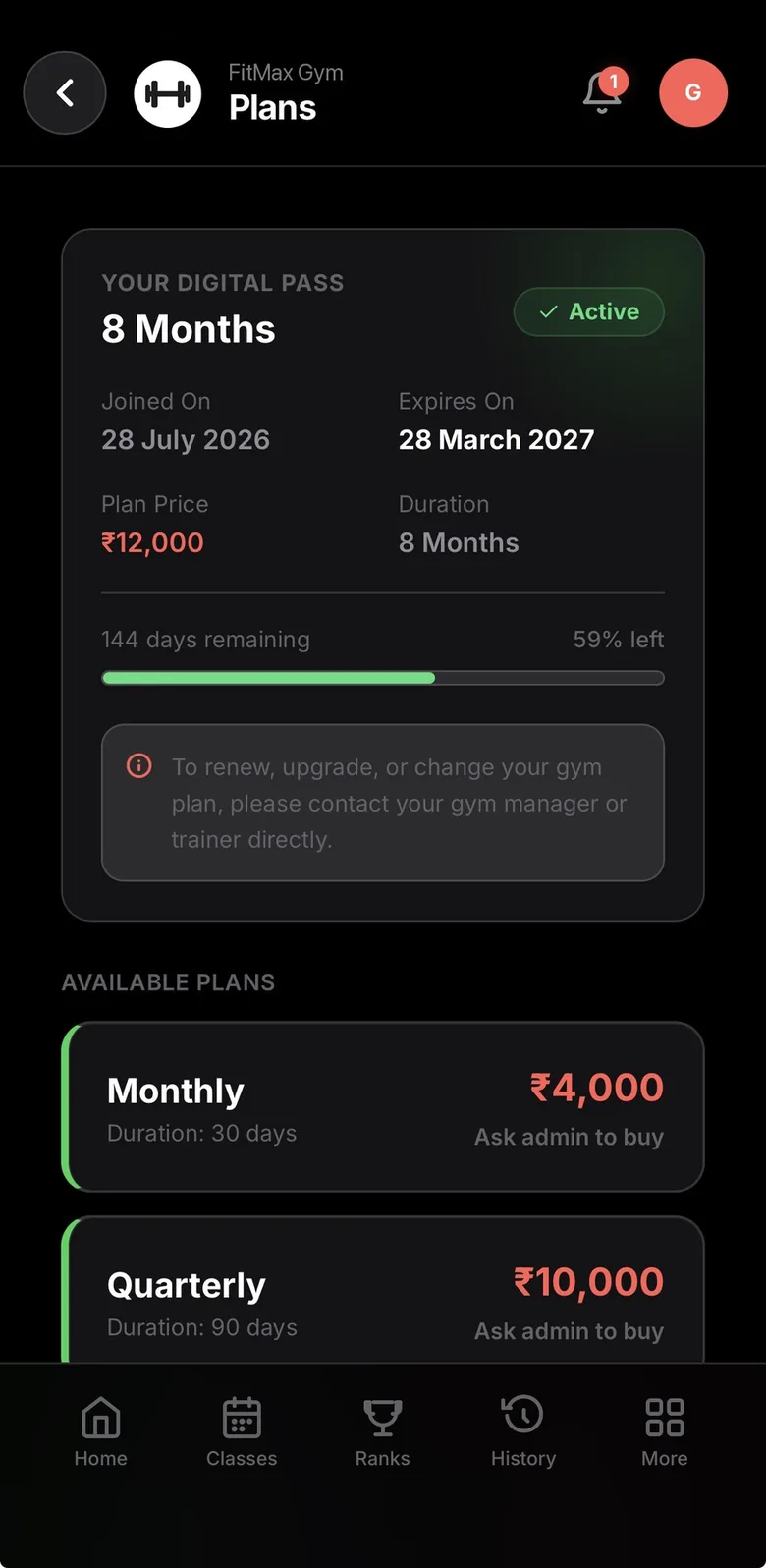
- Show each member their plan, start date, end date and payments in their app, so nothing comes as a surprise.
- Remind members before renewal, never after a charge they did not expect.
How do you apply it consistently?
Train the desk on the policy, and give one manager authority for exceptions. Record every freeze, transfer and refund in your system, not in a notebook, so you can see patterns: a lot of medical freezes in winter, or refunds clustering around one plan. Read how members cancel gym memberships in India to see the process from the member’s side.
What GymVise does and does not do here
In GymVise, a gym admin can freeze a member for between 1 and 365 days, which extends their access expiry by those days, and every payment is recorded against the member. Members see their plan, days remaining and renewal options in the app, and get reminders before their plan expires. GymVise does not have a built-in membership transfer or refund workflow, so record those as notes and adjust the plan manually.
Sources
Checked 14 November 2026. Figures from other countries or from vendors are labelled as such, and any example marked as illustrative is not a benchmark.
See how it would work in your gym
We can walk you through the member app and owner dashboard using your own plans and timetable.
Book a free demoFrequently asked questions
Yes. A clear freeze rule keeps members who would otherwise quit during travel, illness or exams, and the paused days are simply added to the end date.
Blanket no-refund terms often cause disputes. Specific, fair terms are safer. Have a lawyer review your refund wording for your state.
Many gyms allow it once per membership for a small admin fee, provided the new member completes a joining form and induction.